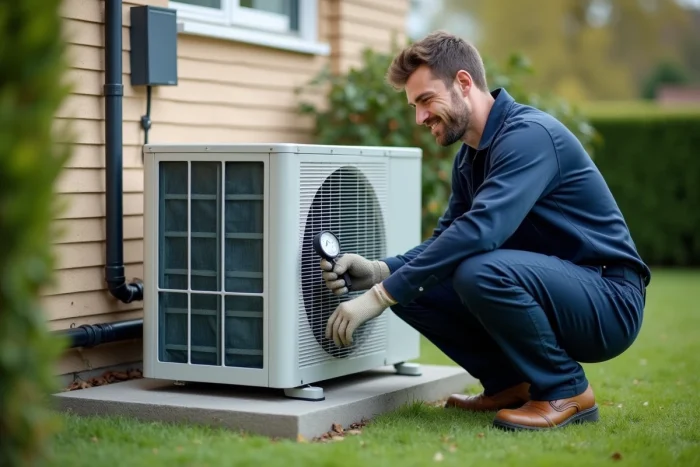
When replacing an old boiler with an air-water heat pump, the first instinct is often to compare models and prices. However, the real challenge occurs beforehand: the condition of the building, the positioning of the outdoor unit, and compatibility with the existing heating network directly affect the performance of the heat pump. Neglecting these steps means investing in a high-performance system that won’t be able to reach its potential.
Noise nuisances and outdoor placement of the air-water heat pump
On the ground, choosing the location of the outdoor unit generates more neighbor disputes than technical problems. The outdoor unit produces a constant hum, and its position influences both the acoustic comfort of the neighbors and the thermal performance of the machine.
The cold air flow expelled by the unit is often underestimated. If placed too close to a neighboring terrace, it creates an unpleasant draft in winter. Positioned against a bedroom wall, it transmits noticeable vibrations at night.
Before finalizing a location with the installer, it is useful to consult a guide for installing an air-water heat pump that details distance and support constraints.
- Keep the outdoor unit away from property boundaries and openings of living spaces (yours and your neighbor’s) to limit noise complaints.
- Place the unit on vibration-damping blocks or an anti-vibration base rather than directly on a concrete slab, which amplifies resonances.
- Direct the air outlet grille towards an open area (garden, driveway) and never towards a nearby facade, to avoid a sound tunnel effect between two walls.
- In a condominium, have the work approved by the general assembly before placing any orders, as installing an outdoor unit on common areas or facades requires a vote.
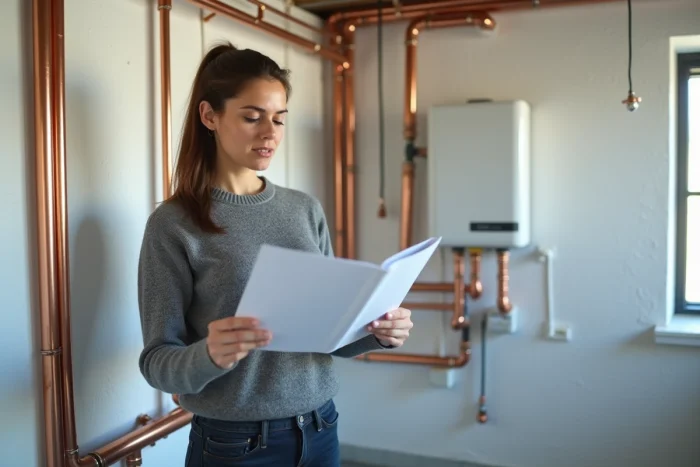
Insulation of the home before installation: the prerequisite that the heat pump cannot compensate for
An air-water heat pump operates at optimal efficiency when the home retains the heat produced. In a poorly insulated house, the heat pump runs longer, consumes more electricity, and does not meet needs during extreme cold. This results in constant use of electric backup, which negates the economic benefits of the project.
Addressing insulation before sizing the heat pump radically changes the outcome. After insulating the attic and replacing single-glazed windows, thermal losses decrease enough that a lower-powered model is sufficient. The overall cost of the project (insulation + less powerful heat pump) can be comparable to that of a large heat pump alone, with superior comfort.
Concrete diagnosis before the heat pump quote
Rather than relying on the energy label of the energy performance diagnosis (DPE), one can ask the installer for a complete thermal assessment of the home. This calculation takes into account the surface area, orientation, wall type, ventilation, and local climate to determine the actual power needed.
Without a thermal assessment, sizing relies on rough estimates. An oversized heat pump performs short cycles (it turns on and off too frequently), which accelerates compressor wear. An undersized heat pump continuously relies on the backup heater.
Compatibility with the existing heating network
Many homes equipped with an oil or gas boiler already have radiators connected by a hydraulic circuit. The air-water heat pump connects to this same circuit, simplifying the work. The priority question to check is the water supply temperature that the emitters require.
High-temperature radiators (older cast iron or steel models) require water above 60 °C to heat a room properly. However, the efficiency of an air-water heat pump significantly drops when it has to produce very hot water. Returns on this point vary depending on the age and size of the radiators, but the principle remains the same: the lower the requested temperature, the more efficient the heat pump.
Underfloor heating or low-temperature radiators
Low-temperature underfloor heating is the best emitter for an air-water heat pump: it operates with water around 35 °C and distributes heat evenly. If the house is already equipped with it, the connection is straightforward.
When existing radiators are of the high-temperature type, there are two options:
- Replace the radiators with larger low-temperature models capable of heating with water at 45-50 °C.
- Keep the current radiators and accept lower efficiency, which increases winter electricity consumption.
- Install underfloor heating in the main rooms during a major renovation and keep the radiators in secondary rooms.
Checking the compatibility of the emitters before signing the quote avoids disappointment on the electricity bill the first winter.
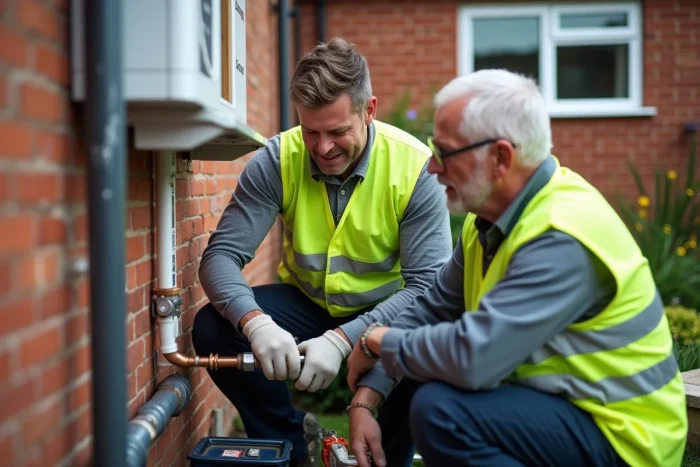
Commissioning and RGE certification: what conditions financial aid
Even if one is handy, the commissioning of an air-water heat pump must be carried out by a certified professional. Handling refrigerants requires a specific capacity certificate. Without this intervention, the device does not benefit from the manufacturer’s warranty or public aid.
To access MaPrimeRénov’ and other support schemes, the installer must hold the RGE (Recognized Environmental Guarantee) qualification. This requirement applies not only to installation: it also covers sizing and commissioning. An installer without RGE can technically install the heat pump, but the aid application will be rejected.
Checks during commissioning
The technician checks the tightness of the refrigerant circuit, adjusts the operating pressures, and sets the heating curve according to the building. This step usually lasts half a day. It is also the time when they explain the operation of the thermostat and seasonal adjustments.
Request the commissioning report and keep it with the invoice: these two documents are essential to activate the warranty and compile the aid dossier. A well-prepared project in advance, from the thermal assessment to the choice of outdoor location, results in a heat pump that runs less, heats better, and costs less over time.