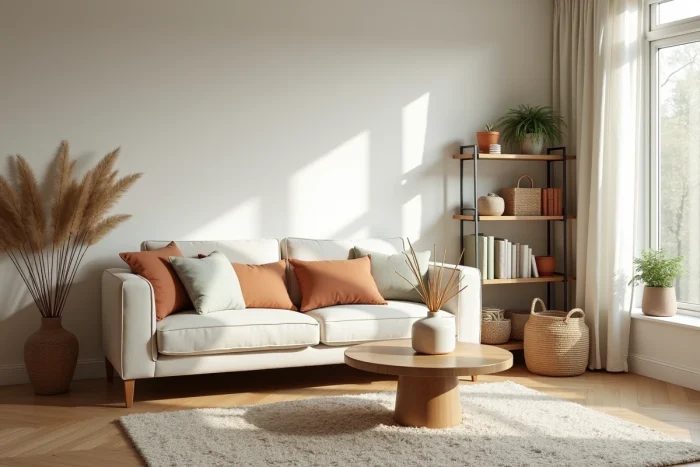
A cluttered interior poses more than just an aesthetic problem. Recent studies in environmental psychology establish a correlation between a disorganized home and increased stress, fatigue, and even anxious and depressive symptoms. Transforming a chaotic house into a harmonious cocoon requires first understanding why domestic chaos weighs so heavily, and then acting on concrete levers that go beyond simple cozy decoration.
Domestic Disorder and Mental Load: What Environmental Psychology Research Documents
The perception of a chaotic interior acts like cognitive background noise. The brain constantly processes the visual stimuli generated by accumulated objects, which reduces concentration capacity and increases mental load. This mechanism particularly affects people who work remotely or juggle family and professional responsibilities.
Since the widespread adoption of remote work after 2020, expectations regarding housing have changed. The home is no longer just a place to rest; it must also serve as a space for emotional regeneration. Using the same room for work, eating, and relaxing intensifies the feeling of permanent disorder and blurs the boundaries between activity and rest.
Available data also associate domestic chaos with poorer sleep quality, regardless of the size of the home. A well-organized studio can provide a more calming environment than a large cluttered house. This observation shifts the focus toward zoning and decluttering rather than adding furniture or decorative accessories.
To delve deeper into this approach, the tips from Conseil Habitat detail several methods for transitioning from a chaotic interior to a structured and serene space.

Room Zoning: Defining Functions to Reduce Visual Chaos
The first concrete lever of action does not involve color or textiles, but spatial organization. Each zone of a room benefits from having only one clearly identifiable function. In a living room that also serves as an office, a simple change of flooring (a rug delineating the workspace) or a low piece of furniture placed perpendicular to the wall is enough to create a visual boundary.
This zoning principle directly addresses the problem amplified by remote work. When the laptop remains open on the dining table, the brain never switches to rest mode. Storing work materials in a closed storage space at the end of the day is a simple gesture whose effect on the perception of the ambiance is measurable on a daily basis.
Applying Zoning in Small Spaces
In a studio or multifunctional room, zoning involves verticality. Open shelves that reach the ceiling free up the floor while visually segmenting the room. The idea is not to add furniture but to redistribute what already exists so that each object has an assigned place.
- Assign a unique function to each horizontal surface (table, desk, countertop) to avoid the accumulation of unrelated objects.
- Use closed containers rather than open ones: visible storage creates visual noise that the brain interprets as disorder, even if the objects are aligned.
- Position the most frequently used items within reach and relegate the rest to higher or dedicated storage spaces.
Sustainable Decluttering: Method and Limits of Occasional Sorting
In recent years, the demand for decluttering and home organizing services has significantly increased. This trend reflects a growing awareness: occasional sorting is not enough if no maintenance system is put in place. Many households notice a return of disorder a few weeks after a major tidy-up.
The difference between effective sorting and cosmetic sorting comes down to one question: does each retained object have a precise and accessible location? If the answer is no for more than a quarter of the items, the storage system itself is problematic, not the volume of objects.
Beyond Decorative Minimalism
The minimalism that circulates on social media proposes empty and photogenic interiors. In reality, a family with children cannot live in an extremely minimalist decor. The goal is not to own less, but for each object to have a defined place.
Field feedback varies on this point: some home organizing professionals recommend starting with storage spaces (closets, garage, basement) before tackling living areas, while others suggest addressing the room where one spends the most time first. Both approaches work, as long as one does not try to do everything in one weekend.
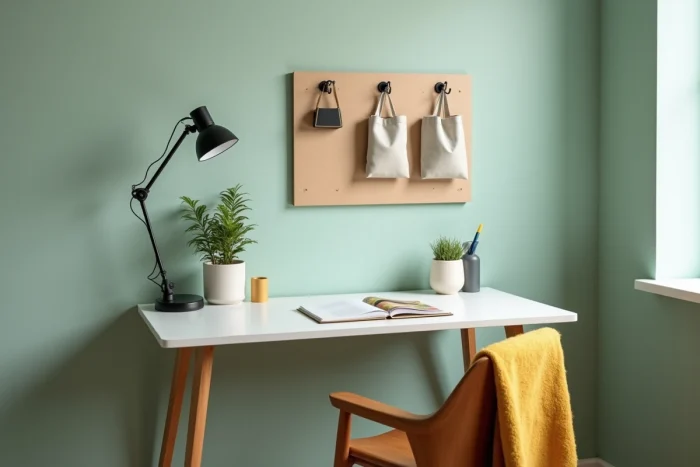
Light and Colors in a Reorganized Interior: Adjusting the Ambiance Without Overloading
Once decluttering and zoning are completed, light and colors enhance the feeling of calm. Natural light remains the most determining factor. Clearing windows (removing objects from the sills, opting for light curtains) radically changes the perception of a room without any purchase.
For artificial lighting, warm and indirect light sources reduce visual stimulation compared to cold ceiling lights. Increasing the number of low light points (table lamps, discreet string lights) allows for modulation of the ambiance according to the time of day.
Choosing Wall Colors
Neutral and soft shades (off-white, beige, light gray, sage green) serve as a calm backdrop for the eye. However, painting all the rooms the same color homogenizes the space and removes zoning cues. Slightly varying tones from one room to another, even with closely related shades, helps the brain identify transitions between living spaces.
- In the bedroom, favor cool or neutral tones that promote sleep, avoiding bright colors on the wall facing the bed.
- In the living room or relaxation area, warm shades (muted terracotta, soft ochre) create a visual envelope conducive to relaxation.
- For a hallway or entrance, a bolder color on a single wall adds depth without visually shrinking the space.
Transforming a disorganized house into a calming environment relies less on decorative purchases and more on reorganizing what exists. Zoning, sustainable decluttering, and working with light are three levers whose effectiveness mainly depends on consistency. An interior remains harmonious only if the storage system that supports it is as easy to maintain as it is to implement.