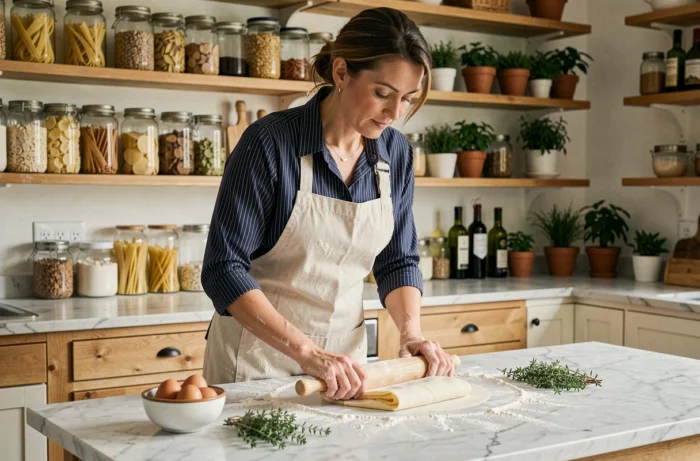
Family meals concentrate sometimes contradictory expectations. The study “Le Mangeur français 2025-2026,” presented by GECO Food Service in September 2026, confirms that consumers want pleasure, practicality, a controlled budget, and a diet perceived as healthy all at the same time. Regarding time, 35% of French people report lacking time to cook, even among those who enjoy it. These tensions shape what we actually put on the plate during the week and what we allow ourselves on the weekend.
Fruit and vegetable budget: the real bottleneck for family recipes
Before talking about recipes, we need to discuss shopping. The Observatory of Fruit and Vegetable Prices from Familles Rurales, published in September 2026, reminds us that a family of four must allocate a highly variable budget to meet the recommendations of the PNNS. The observation is clear: only one in ten children consumes five portions of fruits and vegetables per day.
This gap between nutritional recommendations and the reality of the shopping basket explains why family recipes often prioritize starches, cheese, or legumes. These ingredients are cheaper per kilo and are more filling, which places them at the center of everyday cooking.
To find dish ideas that take these budget constraints into account while remaining delicious, websites like chez-clara.net offer recipes designed for family life. Seasonal vegetable gratin or soup enriched with red lentils are typical examples of dishes that combine reasonable cost with adequate nutritional value.

Batch cooking and weekday meals: real gains and limits to know
Batch cooking, which involves preparing the bases for several meals in one session for the week, is increasingly appealing to busy families. The principle is simple: chop, cook, and store vegetables, grains, and proteins on Sunday, then assemble each evening in just a few minutes.
However, feedback from the field diverges on one point: batch cooking can reduce meal variety. When everything is prepared in advance, there is a tendency to repeat the same bases (rice, potatoes, carrots). Children eventually get bored, and the joy of cooking disappears behind the logistics. A few adjustments can help mitigate this pitfall:
- Vary sauces and seasonings on the same base of vegetables or starches, rather than changing the main ingredients each week
- Prepare two different proteins (roast chicken and lentils, for example) to create distinct combinations throughout the week
- Keep one improvised meal during the week, without a pre-established plan, to break the routine and allow for spontaneous cravings
Fall family recipes: three dishes that pass the everyday test
Autumn provides a favorable ground for family recipes: squashes, leeks, apples, mushrooms. These products are often among the cheapest on the shelves between September and November.
Butternut squash gratin with cheese
Butternut squash, cut into cubes and steamed, is placed in a baking dish with a light béchamel and grated cheese. Baking takes about twenty minutes. This gratin appeals to children thanks to the natural sweetness of the squash, which masks the sometimes off-putting taste of vegetables for younger ones.
Root vegetable and red lentil soup
Carrots, parsnips, and red lentils cook together in a broth. The red lentils break down during cooking, giving a thick texture without needing cream. A complete vegetarian dish with plant-based proteins, which reheats easily the next day.
Leek and potato tart
A shortcrust pastry filled with melted leeks and slices of potatoes, bound by a mixture of eggs and cream. This type of savory tart can be prepared in advance and is just as good warm or cold, making it convenient for evenings when not everyone dines at the same time.

Family cooking during the week and on weekends: two different logics
The GECO Food Service study highlights a clear distinction in eating behaviors: food is more functional during the week and more convivial on weekends. This divide directly influences recipe choices.
During the week, successful dishes are those that require little chopping, little supervision, and little dishwashing. Baked pasta, quiches made with fridge leftovers, and blended soups check these boxes. The dominant criterion is time, not sophistication.
On weekends, the relationship to meals changes. People are willing to spend forty-five minutes in the kitchen. Children are involved in the preparation. A recipe seen on social media is attempted. The study also notes that social media and artificial intelligence are playing an increasingly significant role in the search for culinary ideas.
This distinction has a concrete impact on shopping organization. Planning weekday meals (simple, economical, quick) separately from weekend meals (more elaborate, convivial) helps avoid overloading the budget by buying ingredients that will only be used once.
Cooking tips to adapt recipes to each family member’s tastes
Families with children know the problem: a dish that one likes may not please another. Rather than cooking multiple menus, a few simple techniques allow starting from a common base and adapting it.
- Serve the sauce separately so that everyone can adjust according to their preferences (tomato sauce, cream, pesto)
- Offer a raw vegetable on the side for children who refuse cooked vegetables, maintaining nutritional intake without conflict at the table
- Add grated cheese or croutons at the last moment to soups and gratins, so those who want crunch can help themselves
Adapting the presentation rather than the recipe requires less effort than preparing two dishes. It also allows children to gradually get used to flavors they initially reject, as the dish remains visible on the table.
Family cooking relies less on spectacular recipes and more on clear organization. A well-seasoned seasonal gratin, a hearty soup, a tart made with what’s left in the vegetable drawer: these simple dishes endure because they meet the four criteria that families no longer want to sacrifice. The real challenge is not finding the right recipe, but building a shopping and preparation routine that lasts over time.