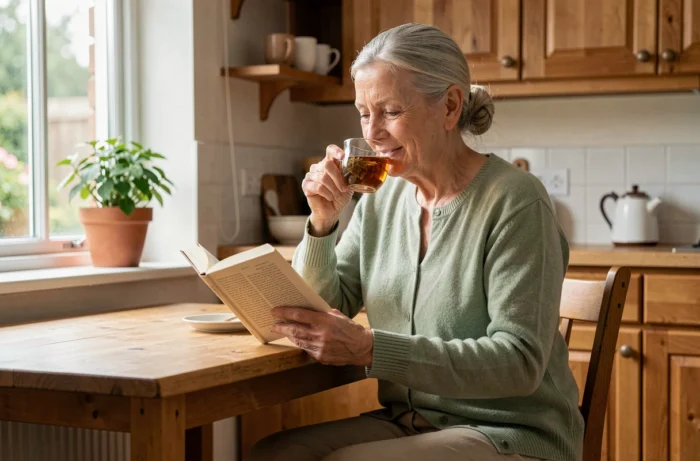
The health of seniors relies on measurable parameters: maintaining mobility, quality of sleep, vaccination coverage, and housing adaptation. Comparing these levers allows us to identify those that weigh most heavily on daily autonomy.
Recent data shows that France has a high life expectancy after 50, but the number of years lived in good health remains lower than that of other European countries. This gap directly questions the effectiveness of the prevention strategies implemented for people over 60.
Health prevention for seniors: the levers compared by their impact on autonomy
Not all wellness advice is equal. Some act on the prevention of chronic diseases, others on cognitive maintenance or the reduction of fall risk. The table below summarizes the main documented levers and their areas of action.
| Prevention lever | Main impact | Recommended frequency |
|---|---|---|
| Physical activity (walking, gentle gym) | Mobility, fall prevention, cardiovascular health | Daily, minimum 30 min |
| Diet rich in protein and calcium | Maintenance of muscle mass, bone health | Every meal |
| Vaccination (flu, pneumococcus, shingles, RSV) | Prevention of serious infections | According to vaccination schedule |
| Housing adaptation | Reduction of fall risk, maintenance at home | One-time evaluation |
| Social connection (group activities, volunteering) | Mental health, prevention of isolation | Several times a week |
| Sleep monitoring | Physical recovery, mental balance | Daily |
Physical activity and diet are the two pillars cited by almost all institutional sources. In contrast, expanded vaccination coverage and housing adaptation remain underestimated in actual practices.
Specialized resources allow for a deeper exploration of each of these areas. The practical sheets available on the optimumsante.fr website for seniors detail the prevention measures accessible after 60.
Vaccination for seniors over 65: an expanded schedule still unknown

The vaccination prevention for the elderly is no longer limited to seasonal flu and Covid-19. The recommendations now include pneumococcus and shingles starting at age 65, as well as RSV for those aged 75 and over, or from 65 in case of heart or respiratory disease.
This extension of the vaccination schedule targets infections that cause prolonged hospitalizations among seniors each year. Pneumococcus, for example, remains a common cause of severe pneumonia in this age group.
The vaccination rate for shingles and pneumococcus remains low compared to that of the flu. Several factors explain this gap:
- A lack of awareness about the expanded vaccination schedule among patients themselves and sometimes among family caregivers
- The absence of a reminder campaign as visible as that for the annual flu
- Confusion between recommended vaccines and those considered optional
Checking vaccination coverage during each annual medical consultation is a low-cost, high-yield preventive gesture for maintaining autonomy.
Home autonomy services: the reorganization that changes daily support
Since 2023, home autonomy services (SAD) have replaced the former SAAD, SSIAD, and SPASAD. This reform aims to coordinate daily assistance (personal care, meals, shopping) and nursing or physiotherapy care under one structure. The compliance of the structures was to be completed by the end of 2025.
For families, this consolidation simplifies procedures. A single contact manages both the assistance plan and the care aspect. In contrast, the former compartmentalized structures often required multiple contacts and administrative files.
The APA applies to individuals aged 60 and over assessed in GIR 1 to 4, meaning those with significant loss of autonomy. Still autonomous retirees fall under a different circuit: pension funds can finance prevention and housing adaptation actions without going through the APA.
Differentiating these two groups allows for directing each senior to the appropriate system without waiting for a deterioration in health status.
Housing adaptation and physical activity: two investments with measurable returns
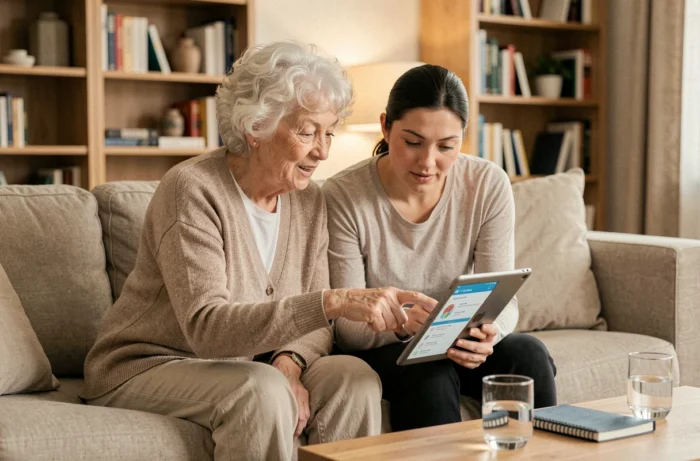
Falls at home are one of the leading causes of loss of autonomy among the elderly. Housing adaptation (grab bars, walk-in showers, enhanced lighting) directly addresses this risk. Financial assistance is available through the APA, pension funds, or certain local programs, but it remains contingent on a prior evaluation of the housing.
An adapted home reduces the risk of falls much more effectively than simple cautionary advice. Material investment complements physical activity: strengthening balance through walking or gentle gymnastics does not eliminate the physical obstacles of a poorly arranged interior.
Daily physical activity, even moderate, produces documented effects on mobility, sleep, and mental health. Walking remains the most accessible option, with recognized anxiolytic and antidepressant effects. For seniors facing mobility issues, adapted activities (aquagym, tai chi) allow for maintaining a sufficient level of effort without excessively straining the joints.
Nutrition and hydration after 60
The energy expenditure of seniors is higher than that of young adults for the same activity. The needs for protein, calcium, and hydration increase, while the sensation of thirst decreases with age. Consuming eggs, meat, or fish at least once a day, combining dairy products and fruits, and drinking regularly even without feeling thirsty are simple guidelines to follow.
The distribution of meals is as important as their content. Three meals a day supplemented by snacks (yogurts, fruits) limit muscle loss and episodes of hypoglycemia.
The gap between life expectancy and years of healthy life in France shows that longevity alone is not enough. The most effective levers—expanded vaccination, housing adaptation, regular physical activity—reinforce each other. Each taken in isolation has a limited effect; combined in a coherent prevention plan, they allow for maintaining autonomy at home over time.