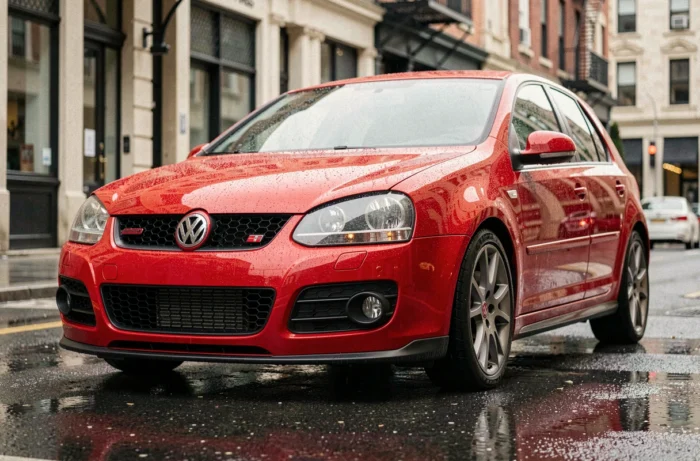
Whether you’re commuting through the city or cruising on the motorway, the Golf 5 GTI remains a compact car that impresses with its ability to combine punchy performance with a comfortable ride. Its 2.0 TFSI engine produces 200 horsepower, a level of power that, even years after its launch, keeps this generation among the benchmarks for affordable used performance cars.
The Golf 5 GTI’s 2.0 TFSI: a turbo engine built for everyday driving
The Golf 5 GTI is often described as a sports car, but first and foremost, it’s a car you can use every day. The 2.0 TFSI engine, with direct injection and a turbocharger, delivers its 200 horsepower progressively, without any sudden surge at low revs. The torque available from the mid-range makes overtaking and merging onto fast roads feel effortless, without putting the engine under strain.
To better understand the Golf 5 GTI’s horsepower and what it means in practice, it’s worth noting that the turbo response is more linear than that of older or less well-tuned engines. The engine doesn’t need to rev high to deliver strong acceleration, making it easier to drive in town.
Torque comes in early and remains usable across a wide rev range. In practice, this means cruising in sixth gear on the motorway with the engine relaxed, then finding plenty of punch by dropping down just one gear to overtake. The TFSI engine doesn’t need to be pushed hard to deliver brisk acceleration.
Manual or DSG: how they change the driving experience
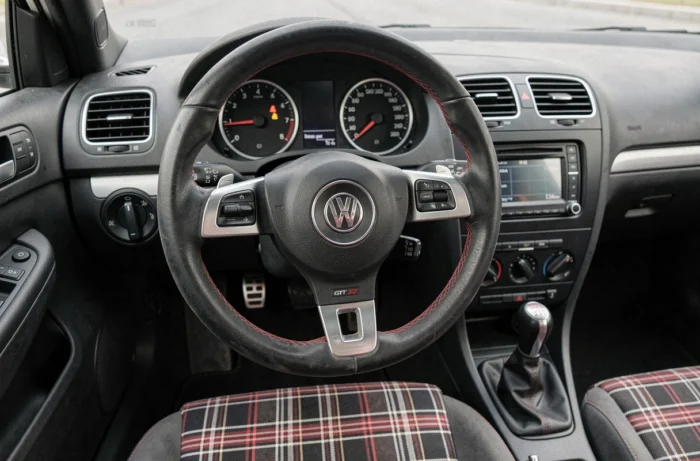
The Golf 5 GTI was offered with two transmissions: a six-speed manual and the renowned six-speed dual-clutch DSG. Choosing between them makes a real difference to the car’s character in everyday use.
The six-speed manual
The manual gearbox is precise, with short throws that suit the model’s sporty character. Gear changes feel direct and well guided. For drivers who like to stay fully in control of their shifts, it’s the obvious choice—and it’s also the less expensive option to maintain over the long term.
The six-speed DSG
The DSG makes city driving much more comfortable. Gear changes are almost imperceptible, and the automatic mode handles traffic jams smoothly and without tiring the driver. In Sport mode or when shifting manually with the paddles, it changes gear faster than most drivers can manage themselves.
The main thing to watch is gearbox maintenance: the mechatronic unit’s oil and filter need to be changed regularly. Delaying this service can lead to jerky shifts or hesitation, especially when the gearbox is hot. When buying used, check the service history and test the gearbox in real-world conditions (cold start, slow-moving traffic and brisk acceleration).
Comfort and handling in the Golf 5 GTI
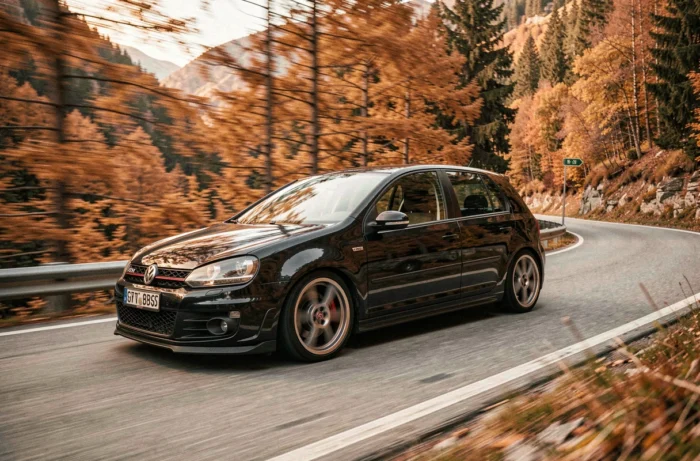
The fifth-generation Golf marked a real step forward in chassis quality. Its MacPherson-strut front suspension and multi-link rear suspension deliver a rare balance of sporty handling and the ability to absorb road imperfections.
- In fast corners, the Golf 5 GTI remains neutral and predictable, with no unwanted body movement. The driver knows exactly where the limits of grip are.
- On rough roads, the suspension absorbs bumps well without transmitting excessive harshness into the cabin. It can’t match the comfort of a saloon, but the ride remains reasonably firm for everyday use.
- The ventilated front discs provide dependable braking. Even after a sustained descent through mountain passes, the pedal stays firm and braking remains progressive.
The cabin is understated and well built, and has aged better than many compact cars from the same era. The low-set sport seats hold the upper body securely without becoming uncomfortable on long journeys. The boot is practical for a performance car, adding to the Golf’s versatility.
Buying a used Golf 5 GTI: what to check before you buy
Buying a Golf 5 GTI today means purchasing a car that’s at least fifteen years old. Certain areas deserve particular attention during an inspection.
- The 2.0 TFSI’s timing chain is a known weak point: a rattling noise on a cold start may indicate a worn chain tensioner. If it hasn’t been replaced, the repair can be costly.
- The turbo should build boost without any unusual whistling or blue smoke from the exhaust. A loss of power under hard acceleration often points to a problem with the boost system.
- The tyres and brakes offer a good indication of how the car has been used. Uneven wear on the front tyres may suggest misaligned suspension or a particularly demanding driving style.
- On DSG models, test the gearbox when hot, after at least twenty minutes of driving, including repeated stops and hill starts.
Prices vary depending on mileage, mechanical condition and the presence of options such as a sunroof or a special edition (particularly the Edition 30). Well-maintained examples with a complete service history naturally command a premium.
Low-emission zones and city driving
The petrol-powered Golf 5 GTI has a more favourable Crit’Air rating than a diesel car from the same era. However, access to low-emission zones depends on the city and its local rules, not just the vehicle’s age. Before buying, check the zone boundaries, operating hours and any exemptions that may apply to your usual journeys. Rules vary across France and can change, so anyone planning to use the car daily in a city should check the requirements for their specific area.
The Golf 5 GTI remains a sporty compact whose 200-horsepower 2.0 TFSI delivers on the road and in the city. Its balanced chassis and versatility make it a sensible used-car choice, provided you check the key areas (timing chain, DSG gearbox and turbo) and confirm that it complies with local driving restrictions.