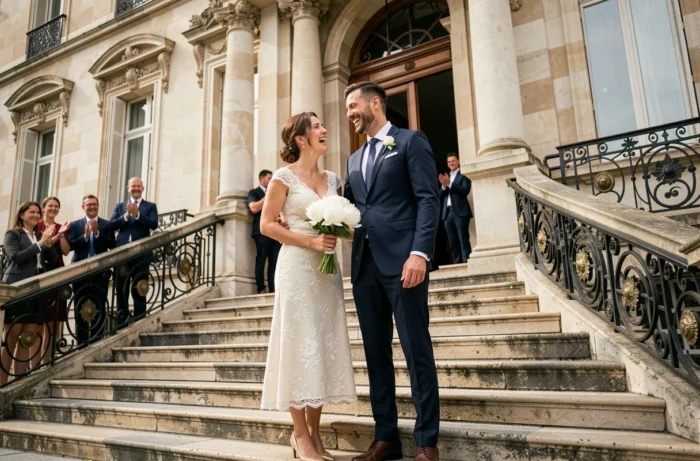
The time chosen for the civil wedding sets the pace for the entire day, from the morning preparations to the first dance. Time slots offered by town halls vary from one municipality to another, with no uniform national rule. Comparing the most common time slots helps you understand what each option means for logistics, guest comfort and coordinating the day with a religious or secular ceremony.
Time slots offered by town halls: how they vary from one municipality to another
There is no single nationwide time slot for civil weddings. Each town hall schedules ceremonies according to its own constraints: the number of weddings planned for the same day, the availability of the civil registrar and the building’s opening hours.
In Paris, the town hall sets the date and time based on availability, and practices vary from one arrondissement to another. Most Paris town halls do not hold weddings on Saturday afternoons, while some do. This example from Paris reflects a broader reality: Saturday afternoon appointments are not available everywhere.
The table below summarizes the three main time slots most commonly available and their direct implications for planning the day.
| Time slot | Typical availability | Preparation time in the morning | Coordination with a religious or secular ceremony | Main drawback |
|---|---|---|---|---|
| Morning (9am-11am) | Generally available on weekdays and Saturdays | Limited (early start, quick dressing) | Possible in the afternoon, with a long break | Stressful morning preparations |
| Early afternoon (1pm-2pm) | Available on Saturdays in most municipalities | Relaxed (the whole morning is free) | Can follow directly in the late afternoon | A packed schedule from 2pm onward |
| Late afternoon (3pm-5pm) | Less common; depends on the town hall | Very relaxed | Difficult to fit in before the evening | Cocktail reception and dinner start late |
Before putting together any schedule, first contact the town hall to find out which time slots are actually available on your preferred date. Several weddings may be scheduled on the same day, so choosing the time of your civil wedding at the town hall often means choosing from the remaining slots rather than having complete freedom.
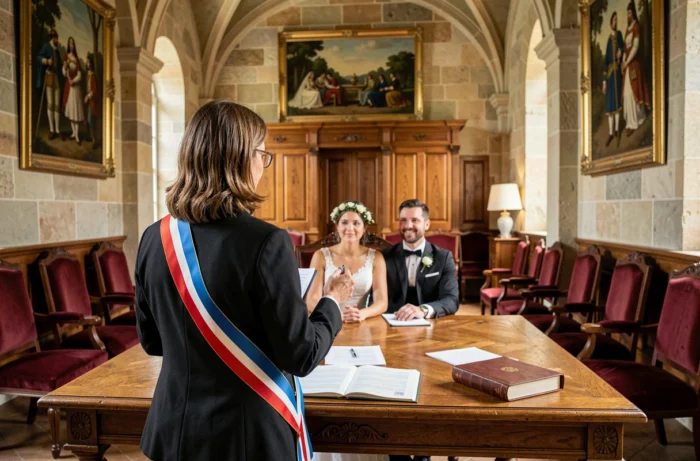
Morning or afternoon civil ceremony: how each affects the day
A morning slot (9am-11am) means the couple will usually need to finish their hair, makeup and dressing by 8:30am. The advantage comes later in the morning: once the civil ceremony is over, the rest of the day can unfold without a tight schedule. Lunch with loved ones, a photo session in natural light or some time to rest are all possible before an afternoon religious or secular ceremony.
An early-afternoon slot (1pm-2pm) reverses the pattern. The morning stays relaxed, and preparations can take place without pressure. However, the second half of the day becomes more compressed: the town hall, group photos, travel to the reception venue, cocktail reception and dinner follow one another quickly.
Impact on guests and witnesses
A civil wedding at 10am means guests need to arrive by 9:45am. For those travelling, this may mean staying in a hotel the night before or setting off very early. By contrast, a 2pm slot gives guests time to arrive on the day without too much pressure.
The witnesses and the couple should arrive early, often around fifteen minutes before the scheduled time. When several ceremonies are held back-to-back at the same town hall, there may also be a wait before guests can enter the wedding room.
How long the civil ceremony lasts and how much buffer time to allow
A civil ceremony generally lasts around twenty minutes, including the reading of the relevant articles of the Civil Code and the exchange of vows. Some civil registrars personalize the ceremony further, which may make it slightly longer.
Allowing at least thirty minutes beyond the expected end time helps prevent delays from disrupting the rest of the schedule. Three factors often make the ceremony run longer than expected:
- A previous couple running late when several weddings are held one after another in the same room
- Group photos on the steps or in the council chamber, which couples often underestimate
- Informal conversations with the civil registrar and the signing of the register by the witnesses and the couple
Building this buffer into the overall schedule protects the cocktail reception and caterer from a knock-on delay.
Civil and religious ceremonies on the same day: plan for the timing
When a church or temple ceremony follows the town hall ceremony, the Civil Code requires the civil wedding to take place before the religious ceremony. The time between the two depends on the distance between the town hall and the place of worship, the wedding party’s travel time and whether you want a photo session in between.
A civil ceremony at 10:30am followed by a religious ceremony at 3pm leaves a comfortable buffer. A civil ceremony at 2pm followed by a religious ceremony at 4pm leaves less than two hours, including travel and photos. This is the first calculation to make before confirming a time with the town hall.
- Check the ceremony times offered by the place of worship before booking the civil ceremony slot
- Estimate the actual travel time between the town hall and the church (wedding party travelling by car, Saturday traffic)
- Set aside at least forty-five minutes for couple portraits if natural light is important

The most important factor when choosing a time is the town hall’s actual availability on your preferred date. Contacting the civil registry office several months in advance helps secure a slot that works with the rest of the schedule, rather than having to plan the entire day around the only time left.