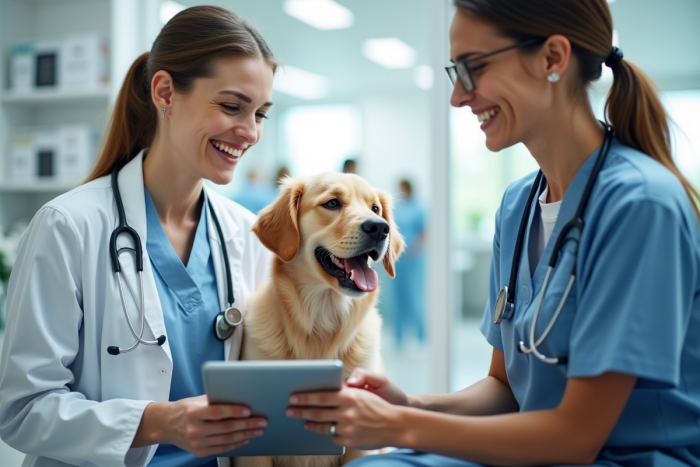
A veterinary software can today automate inventory management, schedule appointments, monitor the vital signs of animals, and instantly transmit files to practitioners. The veterinary assistant juggles digital tools that profoundly change the organization of work, as well as the skills required for the position.
The emergence of these platforms transforms the distribution of tasks within clinics and imposes new requirements for continuing education. Some solutions, although renowned for their simplicity, reveal unexpected uses and sometimes create friction points in the daily lives of teams.
How digital platforms are transforming the daily lives of veterinary assistants
The daily life of veterinary assistants is changing. Digital platforms are now establishing themselves as the engine of this silent revolution. With their use, care monitoring becomes more precise, communication with pet owners becomes smoother, and files are automated. These tools, designed to improve care in clinics, set new standards for quality and efficiency.
Let’s look at GMVET 1: the centralization of medical data is no longer a technical feat, but part of everyday life. Assistants have access to the treatment history at all times, simplifying appointment organization and intervention preparation. Whether it’s managing medication stocks, orchestrating appointment scheduling for dogs and cats, or maintaining contact with owners, everything is done from a single interface designed to meet the sector’s constraints.
Here’s how these platforms are reshaping the role of veterinary assistants:
- Immediate access to care and vaccination tracking
- Facilitated management of medical records, without unnecessary paperwork
- Enhanced collaboration between veterinarians and assistants on a daily basis
By gaining ground, these digital tools, whether in France or elsewhere, profoundly alter work methods. The relationship with pet owners is becoming digitalized, providing quick access to information and more personalized advice. The platforms raise the bar for data management and confidentiality. Veterinary assistants are becoming central actors in this transformation, taking on increasingly varied and strategic missions.

Innovative tools and new skills: what technology changes in veterinary practice
Veterinary management now takes on a whole new dimension with the massive arrival of digital tools. Electronic medical records replace old binders, accelerate the flow of information, and secure data storage. A simple click allows for retrieving the care history for each animal, limiting oversights and refining therapeutic monitoring.
Unprecedented features, renewed uses
Digital platforms offer a range of functions that transform the organization of veterinary clinics:
- Instant access to medical history
- Automated vaccination reminders for each patient
- Secure sharing of information among all team members
- Reduction of paper use through digital document management
The issue of confidentiality is paramount, as the very nature of the information collected requires rethinking practices. Clinics adapt their processes, train teams to use these new tools, and integrate artificial intelligence into diagnostics or medical imaging. This digital shift involves acquiring new skills: a fine management of software, constant vigilance over the integrity of records, and the ability to understand and use recommendations from decision-support algorithms.
Animal care becomes more precise, team coordination improves, and service quality strengthens. The impact is also measured in managing the carbon footprint, whether in feeding or care logistics, as optimizing processes also means better resource allocation. Technology does not replace veterinary expertise: it accompanies it, broadens it, and pushes it to reinvent itself in the face of increasingly diverse expectations, for both owners and pets.
Tomorrow, the veterinary clinic is already envisioned as a space where technology is discreet yet essential, serving more just, faster, and more humane care.